
612.444.8049
Moving from California to Minnesota: Cost, Taxes & Lifestyle
- Josh Pennington
- April 23, 2026
- 12:01 pm
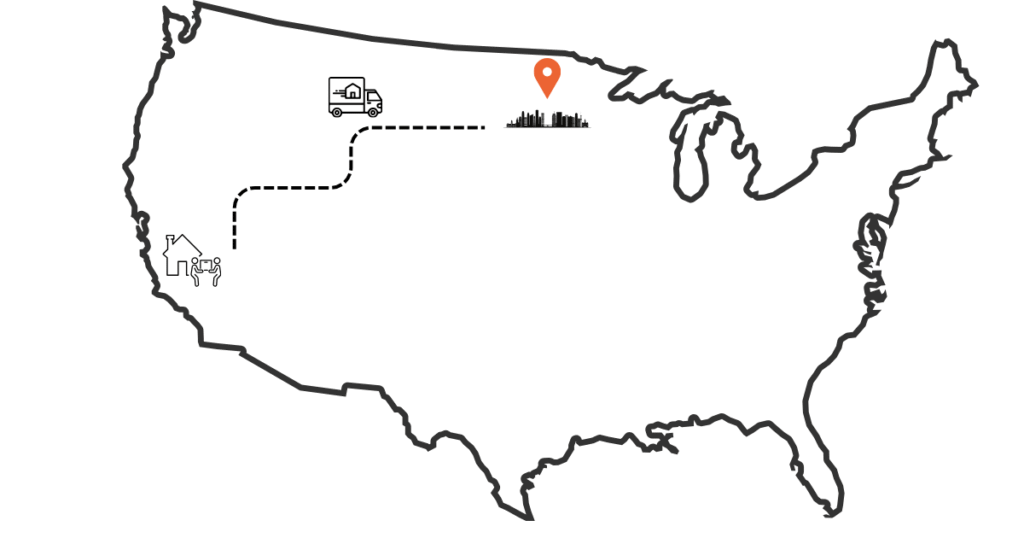
California has been losing residents to other states for years now, and the Twin Cities are on the receiving end of that shift. People are coming from the Bay Area, Los Angeles, San Diego, and Sacramento. And the reasons are pretty consistent across the board.
Why People Are Leaving California for Minnesota
The cost of living in California’s major metros has reached a point where it’s genuinely difficult to build financial stability. Housing costs are extreme. Taxes are high. Even everyday expenses add up in ways that feel disproportionate to what you’re actually getting.
Minnesota doesn’t promise California weather or California mountains. But for a lot of people making this move, what it offers in return is something they’ve been struggling to find for years: a realistic path to owning a home, breathing room in their monthly budget, and a quality of life that doesn’t require spending everything you earn just to maintain it.
The reasons vary depending on the person, but the financial pressure is almost always part of the story.
- Housing costs. The Bay Area and Los Angeles median home prices are often 2–3x the Twin Cities. For people who’ve been renting indefinitely because buying feels impossible, Minnesota opens a real door to ownership.
- Overall cost of living. Groceries, dining, and services in California are significantly more expensive than in the Twin Cities. The paycheck-to-lifestyle ratio here is simply more favorable for most income levels.
- Remote work. A significant portion of California transplants in Minnesota are remote workers who no longer need to be in a high-cost coastal market. When location isn’t tied to a specific office, the financial math shifts dramatically.
- Quality of life recalibration. A lot of people in California are working extremely hard to afford a lifestyle that still feels stressful. The Twin Cities offer a comparable urban experience — real culture, good food, strong neighborhoods — at a fraction of the cost.
- Political and social culture. Minnesota is one of the more progressive states in the country. For California residents concerned about finding a culturally aligned community outside the coasts, the Twin Cities are a genuine option.
💰 Cost of Living: The Numbers That Matter
Home Prices
- Twin Cities median: ~$350,000–$400,000
- San Francisco Bay Area: often $900,000–$1.3M+ depending on area
- Los Angeles metro: often $700,000–$1M+
- San Diego: often $750,000–$950,000+
- Sacramento: often $450,000–$600,000
Rent
- 1-bedroom (Twin Cities): $1,200–$1,800/month
- 1-bedroom (San Francisco): often $2,800–$3,800/month
- 1-bedroom (Los Angeles): often $2,200–$3,200/month
- 1-bedroom (Sacramento): often $1,500–$2,100/month
🏡 Rent vs. Buy
What Most People Do
If you’re moving to Minnesota, the goal for most people isn’t to rent long-term, it’s to get settled and buy.
- Rent first if you need flexibility
- Buy if you’re planning to stay
The difference is significant regardless of which California market you’re coming from. For many California renters, moving to Minnesota is the first real opportunity to buy a home that’s been available to them in years…or ever.
Taxes
Both states have income taxes. California’s are among the highest in the country. Minnesota’s are meaningful but notably lower than California’s top brackets for most income levels.
Property taxes: California’s Proposition 13 can hold long-term owner taxes down, but new buyers get assessed at purchase price. Minnesota’s effective property tax rates are moderate and predictable.
The rental savings alone are significant enough that many California transplants find themselves banking more money in their first year in Minnesota than they had in their entire time in California.
Check out our full blog for a breakdown of what monthly living costs actually look like in Minneapolis-St. Paul.
Find out how much home you can afford in the Twin Cities
Use our home loan calculator to estimate your total mortgage payment, including taxes and insurance. Simply enter the price of the home, your down payment, and details about the home loan, to calculate your mortgage payment, schedule, and more.
❄️ WEATHER, The Honest Trade-Off

Yes, It Gets Cold
January will feel like another planet.
There’s no version of this section where we tell you Minnesota weather is better than California weather. It isn’t. California has some of the best climate in the world, and that’s part of why it’s so expensive.
Minnesota winters are genuinely cold. Coming from Southern California especially, January here will feel like another pla
 It's Different in a Good Way, Though
 It's Different in a Good Way, Though
What you’re giving up:
- Mild winters and year-round outdoor comfort
- No extended cold season
- Beach access and the Pacific
What you’re getting:
- Four actual seasons, each distinct and beautiful in its own way
- Summer that you can be outside in without air conditioning (mostly)
- A city that functions in winter rather than shutting down
- Snow, which a lot of California transplants actually find they enjoy
The most common thing we hear from California transplants: the winters are hard at first, but you acclimate faster than you expect. And spring in Minnesota, after a real winter, is one of the most satisfying things you’ll experience.
Check out our complete Minnesota weather guide for the full seasonal breakdown.

🏡 Where California People Tend to Land
Bay Area transplants often gravitate toward neighborhoods with walkability, independent coffee shops, and food culture: Northeast Minneapolis, the North Loop, Lowry Hill, and Mac-Groveland in St. Paul. These areas have the energy Bay Area people are used to at a dramatically different price point.
LA transplants often go for areas with more space and a slightly more suburban feel: Linden Hills, Kenwood, Edina, or the inner-ring suburbs. Still close to the city, but with room to breathe.
Remote workers often end up in areas with a strong home-office setup and good natural surroundings: Stillwater, White Bear Lake, and areas around Lake Minnetonka are popular.
People optimizing purely for value: Roseville, Burnsville, or Brooklyn Center offer solid housing at the lowest price points in the metro.
🏙️ What Stays Surprisingly Similar
People who’ve lived in California are often surprised by how much the Twin Cities offer culturally.
The food scene here is legitimately strong — multiple James Beard nominations, a diverse restaurant landscape, and a local food culture that takes quality seriously. The arts and theater scene is one of the best in the country per capita. The LGBTQ+ community in the Twin Cities is visible, organized, and active. The craft beer and coffee scenes are real.
You’re not moving to a cultural desert. You’re moving to a city that punches significantly above its weight, at a cost of living that makes it feel sustainable.
Thinking About Making the Move?
Find your place in the Twin Cities
Keep Exploring Your Move
Moving from one of these states?
Checkout our other blogs with specific insights to your current state, from lifestyle differences to housing costs and day-to-day living in the Twin Cities.

MKT Real Estate Advisors is a top-producing real estate team with Coldwell Banker Realty, dedicated to helping clients buy, sell, and invest with confidence.
Quick Links

©2025. MKT Real Estate Advisors at Coldwell Banker Realty. All Rights Reserved.