
612.444.8049
Moving from Michigan to Minnesota: A Comprehensive Guide
- Josh Pennington
- April 23, 2026
- 12:01 pm
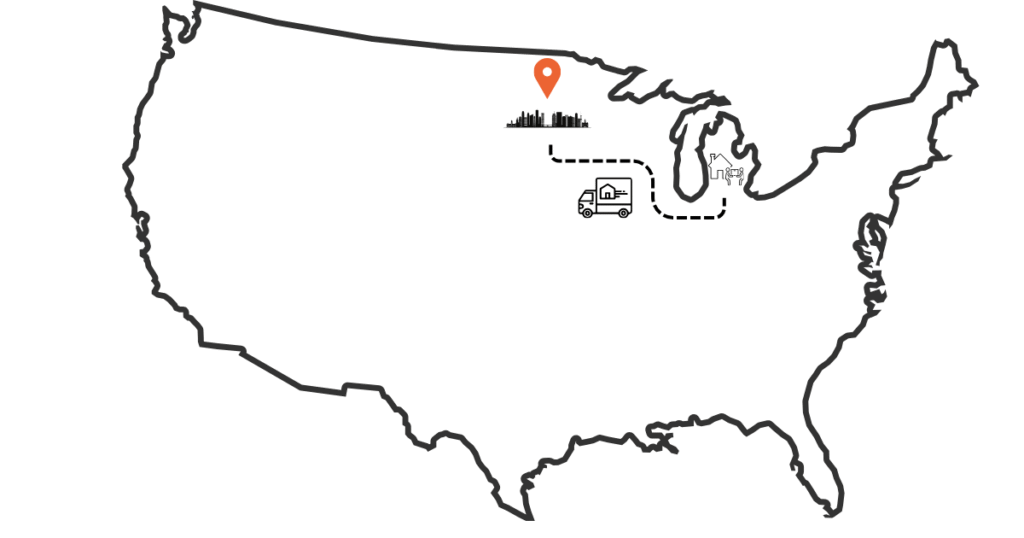
If you’re in Detroit, Grand Rapids, Lansing, Ann Arbor, or anywhere across the mitten, you already have the Midwest baseline. You know cold. You know lakes. You know what it means to root for your city through its rough stretches.
Moving from Michigan to Minnesota: A Midwest Upgrade That Makes More Sense Than You'd Think
So why are more and more Michiganders ending up in the Twin Cities?
Usually it comes down to one of a few things: career opportunity, a bigger metro experience, or a housing market that offers a clearer path to ownership and long-term stability. The culture shock is minimal. The adjustment, for most people, is smoother than they expect.
Michigan is a state with a lot of personality and a lot to offer. But it also has economic pockets that have been stagnant for decades, a Detroit-area housing market that swings between undervalued and unreliable, and a job market in certain industries that can feel limited.
Common reasons people make this move:
- Career options. The Twin Cities’ corporate base is one of the strongest in the Midwest — healthcare, finance, retail, food and ag, technology. For people in fields where Michigan’s economy has contracted, Minnesota opens real doors.
- A bigger city. Detroit is experiencing a genuine resurgence, and Grand Rapids is growing fast. But the Twin Cities offer a more established and diversified metro with more neighborhood variety, more employers, and more going on day-to-day.
- Housing stability. Detroit area home values have been volatile. The Twin Cities housing market has been more consistently appreciating and stable — a better long-term bet for building equity.
- Lake culture without the salt. Michigan has incredible fresh water. So does Minnesota, arguably in higher quantity and more accessible to urban life. It’s a natural fit for people who’ve built their lifestyle around being on the water.
- LGBTQ+ community and inclusive culture. Minneapolis in particular has one of the most established and visible LGBTQ+ communities in the Midwest, which matters to a lot of people making this move. Learn more about LGBTQ+ life in the Twin Cities in our feature blog
💰 Cost of Living: Twin Cities vs Michigan
If you’re coming from Detroit’s suburbs or Grand Rapids, the price difference is real but manageable. If you’re coming from Ann Arbor, you may actually find the Twin Cities more affordable.
Home Prices
Michigan is a wide market — there’s a big difference between a home in Detroit, Ann Arbor, and Traverse City.
- Twin Cities median: ~$350,000–$400,000
- Detroit metro (suburbs): often $280,000–$380,000, with wide variation by area
- Ann Arbor: often $380,000–$500,000 — comparable to or more expensive than Twin Cities
- Grand Rapids: often $280,000–$370,000
- Lansing: often $210,000–$280,000
Rent
- 1-bedroom (Twin Cities): $1,200–$1,800/month
- 1-bedroom (Detroit area): $900–$1,500/month
- 1-bedroom (Ann Arbor): $1,200–$1,800/month — comparable
- 1-bedroom (Grand Rapids): $1,000–$1,500/month
What’s different: The Twin Cities housing market has historically been more stable and more consistently appreciating. Detroit’s volatility has burned buyers before. In Minnesota, the long-term ownership story tends to be more predictable.
🏡 Rent vs. Buy
What Most People Do
If you’re moving to Minnesota, the goal for most people isn’t to rent long-term, it’s to get settled and buy.
- Rent first if you need flexibility
- Buy if you’re planning to stay
Find out how much home you can afford in the Twin Cities
Use our home loan calculator to estimate your total mortgage payment, including taxes and insurance. Simply enter the price of the home, your down payment, and details about the home loan, to calculate your mortgage payment, schedule, and more.
❄️ THE WEATHER: YOU ALREADY KNOW WHAT'S UP
Coming from Michigan, the weather adjustment to Minnesota is probably the smallest on this list.
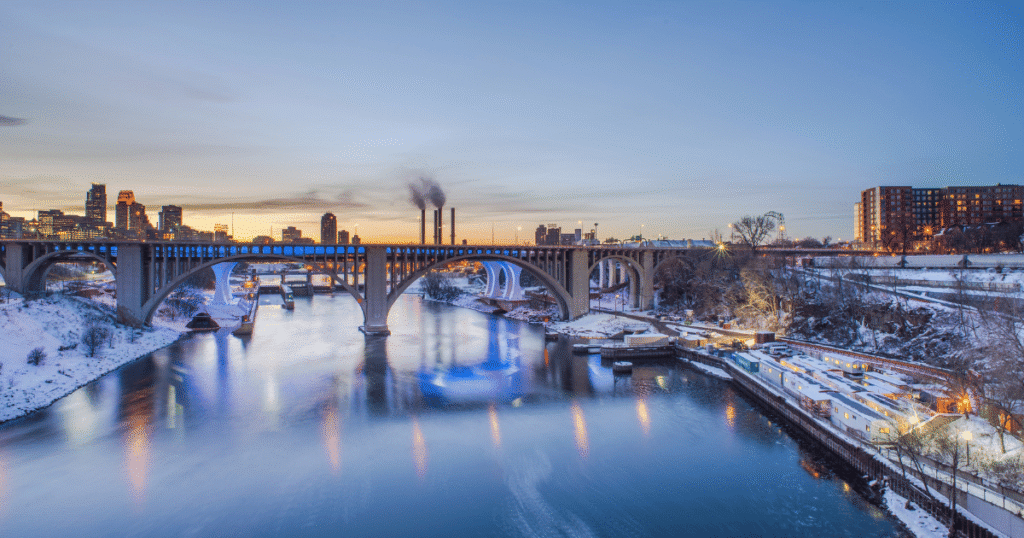
Both states have real winters.
Both get significant snow
Both have Spring/Summers that feel well earned.
The main differences:
- Minnesota winters tend to be colder than Michigan’s lower peninsula, with drier air and more sustained cold snaps
- Michigan’s upper peninsula is actually comparable to or colder than the Twin Cities
- Michigan gets more lake-effect snow from the Great Lakes; Minnesota’s snow tends to fall more steadily and predictably
- Minnesota’s summers are slightly less humid than Michigan’s on average
If you’re from the Upper Peninsula, you’ll probably find the Twin Cities practically mild. If you’re from Detroit or Grand Rapids, January will feel a bit colder but not dramatically different.
The infrastructure here is built for winter. Roads get cleared, people stay active, and the city doesn’t go into hibernation.
Check out our Minnesota weather guide for the full seasonal breakdown.

🏡 Finding Your Neighborhood in the Twin Cities
From Detroit or its suburbs: You’ll likely appreciate areas that have that mix of industrial history and neighborhood revitalization. Northeast Minneapolis, the North Loop, and the Hamline-Midway area of St. Paul have that character. Suburbs like Bloomington, Burnsville, and Richfield mirror a lot of the Oakland County suburb experience.
From Ann Arbor: You’ll want walkability, food culture, and proximity to universities. Southwest Minneapolis, the Stadium Village area, and Prospect Park around the U of M are natural fits.
From Grand Rapids: A mid-sized city with a strong beer culture, a growing arts scene, and a community feel that punches above its weight — that translates well to the Northeast Minneapolis and South St. Paul neighborhoods. Plymouth and Maple Grove have a similar suburban character.
Wanting something new entirely: Edina, Wayzata, or Stillwater offer a higher-end suburban or small-town feel that’s genuinely different from anything Michigan has close to its major metros.
🏙️ What the Twin Cities Adds
The biggest thing Michigan transplants tend to mention after settling in: the variety.
More restaurants, more neighborhoods, more employers, more events. The sense that the city is active and growing — not just in certain pockets, but across the metro. Professional sports teams that are actually competitive. A music and arts scene that consistently surprises people who assumed they were moving somewhere provincial.
The Twin Cities also have a strong sense of civic identity. People are proud of where they live here and it shows in how the city takes care of itself — in the parks, in the neighborhoods, in the culture.
Thinking About Making the Move?
Find your place in the Twin Cities
Keep Exploring Your Move
Moving from one of these states?
Checkout our other blogs with specific insights to your current state, from lifestyle differences to housing costs and day-to-day living in the Twin Cities.

MKT Real Estate Advisors is a top-producing real estate team with Coldwell Banker Realty, dedicated to helping clients buy, sell, and invest with confidence.
Quick Links

©2025. MKT Real Estate Advisors at Coldwell Banker Realty. All Rights Reserved.