
612.444.8049
Moving from Arizona to Minnesota: Cost of Living & Lifestyle Guide
- Josh Pennington
- April 23, 2026
- 12:01 pm
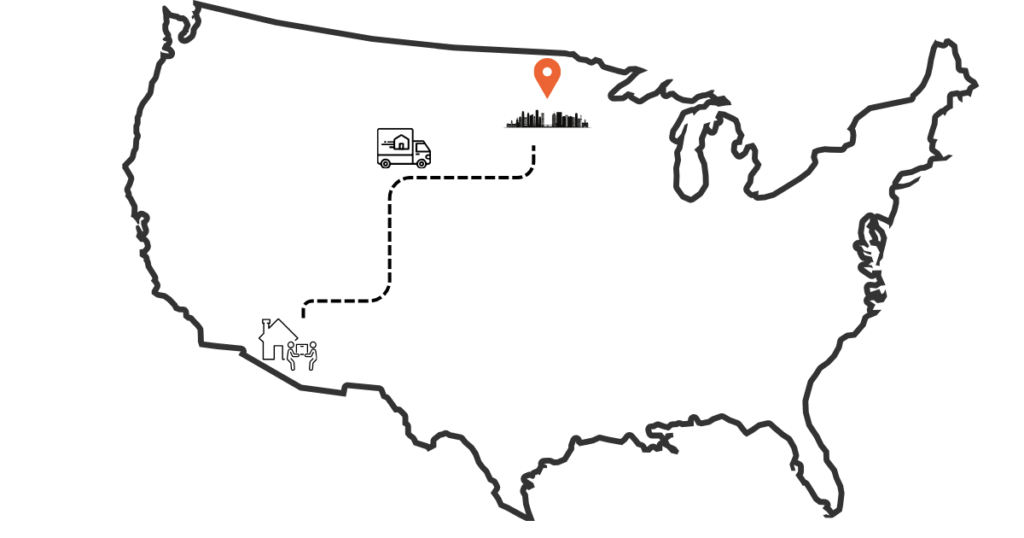
Minnesota is, in almost every way, the opposite of Arizona. And for some people, that’s exactly the point.
That is where the Twin Cities come in.
Arizona has been one of the fastest-growing states in the country for years. Phoenix, Scottsdale, Tucson, Tempe — they drew millions of people with the promise of affordable housing, warm weather, and room to grow.
For a lot of people that promise held up. But for a growing number of Arizonans, the math has stopped working. Home prices in the Phoenix metro have climbed dramatically over the past five years. The affordability advantage that made Arizona attractive in the first place has narrowed considerably. And when you are paying coastal-adjacent prices for a house in the desert, it is worth asking whether there is a better option.
The move from Arizona to Minnesota isn’t as counterintuitive as it sounds once you understand what’s driving it.
- Heat burnout. Phoenix summers regularly top 110°F. May through October is effectively indoors-only weather for a lot of people. If you moved to Arizona for year-round outdoor living and you’re finding yourself trapped inside from spring through fall, the appeal fades.
- Rapid cost increases. Phoenix and Scottsdale have seen some of the steepest home price appreciation in the country over the past five years. The affordability advantage that drew people there has narrowed considerably.
- Water concerns. Long-term water availability in the Southwest is a growing concern that factors into many people’s thinking about where to put down permanent roots.
- Job relocation or family. The Twin Cities have drawn significant corporate expansion in healthcare, technology, and finance, and for people following careers or family, it’s a real destination.
- Wanting seasons. This sounds simple but it’s real. A lot of people find they genuinely miss experiencing a changing year — spring flowers, summer storms, fall color, snow on the ground.
💰 Cost of Living: Twin Cities vs Arizona
Home Prices
Arizona pricing varies a lot by market, and the gap with Minnesota has closed more than most people realize.
- Twin Cities median: ~$350,000–$400,000
- Phoenix metro: often $380,000–$480,000, with Scottsdale and Paradise Valley significantly higher
- Tucson: generally more affordable, often $280,000–$360,000
- Flagstaff: often comparable to or higher than Twin Cities pricing
Rent
Rental prices in the Twin Cities are generally comparable to the Phoenix metro.
- 1-bedroom (Twin Cities): $1,200–$1,800/month
- 1-bedroom (Phoenix): $1,200–$1,900/month
- 1-bedroom (Tucson): $900–$1,400/month
For Phoenix and Scottsdale buyers, the Twin Cities can actually come out ahead on price, particularly when you factor in the fact that Arizona property taxes have been rising as the state’s growth has driven up assessed values.
Arizona has no state income tax on wages (they phased it out in recent years), which is a meaningful difference compared to Minnesota. This is worth factoring carefully into your financial comparison, particularly at higher income levels. That said, overall costs, including housing, insurance, and long-term stability, tend to tell a more nuanced story.
Check out our full cost of living guide for the Twin Cities for a comprehensive breakdown.
Find out how much home you can afford in the Twin Cities
Use our home loan calculator to estimate your total mortgage payment, including taxes and insurance. Simply enter the price of the home, your down payment, and details about the home loan, to calculate your mortgage payment, schedule, and more.
❄️ Weather: Yes, It's Cold. Here's Why People Stay Anyway.
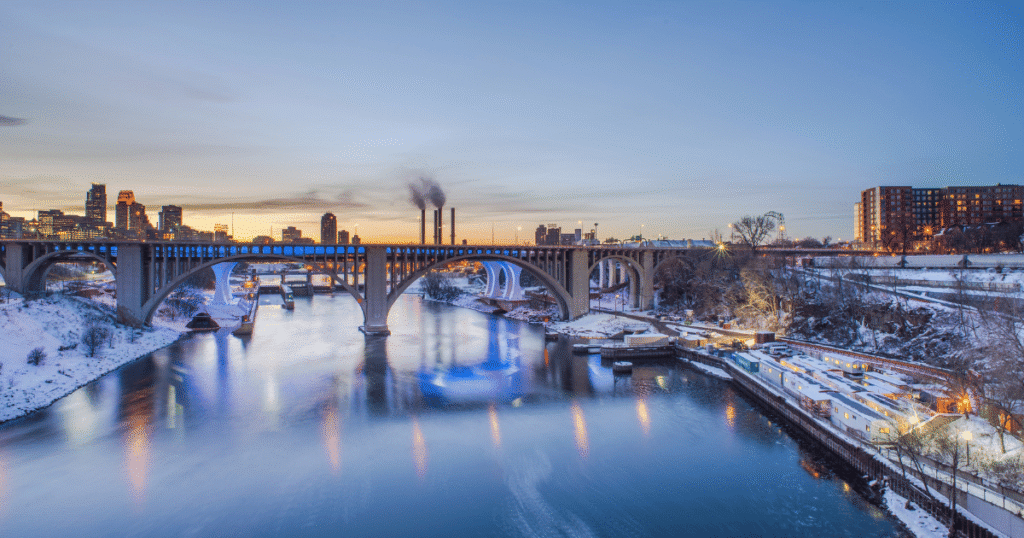
We won’t sugarcoat it.
Minnesota winters are cold.
Coming from Phoenix or Tucson, your first winter will be an adjustment. January in Minneapolis averages around 23°F, with wind chills that go well below zero. It snows regularly. The sun sets around 4:30pm in December. That’s a genuine lifestyle shift.
Here's what Arizona transplants consistently say after their first year:
The winter was hard. Spring was incredible. Summer was the best they’d experienced in years. Fall made them feel like they were living in a screensaver.
The thing about four seasons is that each one makes the next one more meaningful. After a Minnesota winter, spring genuinely feels like a gift. After Arizona’s sameness, that shift is something people find deeply satisfying in ways they didn’t expect.
What Minnesota summer actually looks like for an Arizona transplant:
- Temperatures in the low-to-mid 80s, occasionally hitting 90
- Dramatically lower humidity than Phoenix monsoon season
- Outdoor dining, lake access, and long evenings that you can actually enjoy
- No need to wait until 7pm for the air to be breathable
For the full seasonal picture, check out our Minnesota weather guide.

Thinking About Making the Move?
🏡 Finding Your Neighborhood
From Scottsdale or suburban Phoenix: Look at Edina, Eden Prairie, Minnetonka, or Wayzata. Newer construction, well-maintained streets, good schools, strong amenities — similar energy to the nicer Phoenix suburbs, without the heat.
From Tempe or Phoenix proper: Northeast Minneapolis, Uptown, and the North Loop have the urban walkability and food/nightlife culture that inner Phoenix is starting to develop. The difference is the Twin Cities version is more established.
From Tucson: The arts and culture scene in St. Paul, particularly around Summit Avenue, Grand Avenue, and Mac-Groveland, has a similar independent, creative energy.
Want open space but city access: The outer suburbs like Prior Lake, Chaska, Stillwater give you elbow room and proximity to nature while keeping the city within reach.
🏙️ What the Twin Cities Offers That Arizona Doesn’t
Beyond weather, the Twin Cities offer a few things that are genuinely different from Arizona’s experience:
Established neighborhoods. Minneapolis and St. Paul have neighborhoods with decades of character, old architecture, mature trees, and block-level community. Arizona’s suburban sprawl doesn’t offer the same sense of place.
Water. Lakes aren’t a metaphor here. There are hundreds of them within driving distance, and a significant number within the city itself. After living in a desert, this hits differently.
Walkability. The Twin Cities have some genuinely walkable neighborhoods that Arizona rarely offers outside of a handful of dense downtown corridors.
Cultural depth. The arts, theater, food, and music scene in the Twin Cities is one of the strongest in the country relative to its size; regularly surprising people who come from markets they assumed would be more developed.
Find your place in the Twin Cities
Keep Exploring Your Move
Moving from one of these states?
Checkout our other blogs with specific insights to your current state, from lifestyle differences to housing costs and day-to-day living in the Twin Cities.

MKT Real Estate Advisors is a top-producing real estate team with Coldwell Banker Realty, dedicated to helping clients buy, sell, and invest with confidence.
Quick Links

©2025. MKT Real Estate Advisors at Coldwell Banker Realty. All Rights Reserved.